Different machines, some of them old, and a system already in place. Can it be done?
It depends on how open each machine is, and we find that out together before quoting. GI4 works on the lines you have, in-house, and talks to the systems you already use.
Let's talk about your plant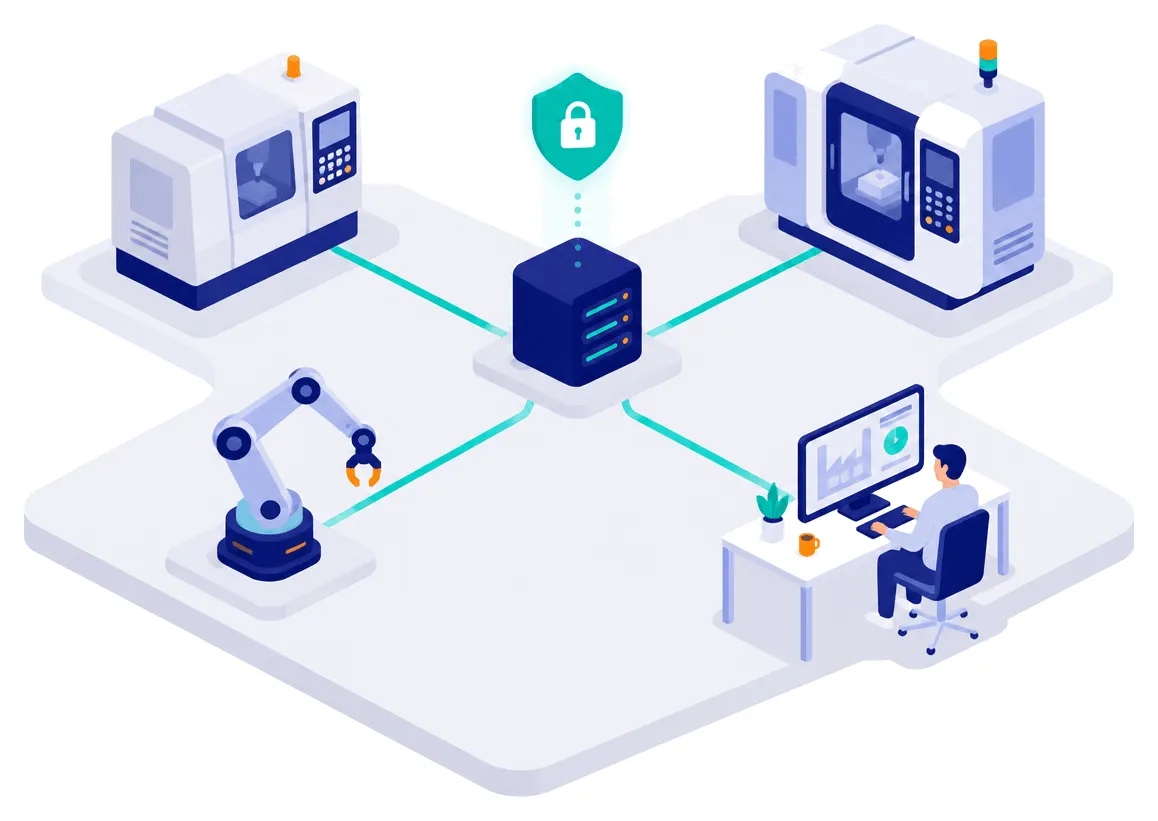
The questions on this page
- “Ready to go, fine. But how long does it really take?”How open the machine is decides everything
- “Do I have to throw away my MES?”Under, alongside or instead of your management system
- “Where does my data end up?”In your company, in two stores
- “How much work is it to add a machine?”Configuration is a file, not a project
- “What exactly do I need to get?”A core, and the modules you need
The problem
“Ready to go, fine. But how long does it really take?”
How open the machine is decides everything
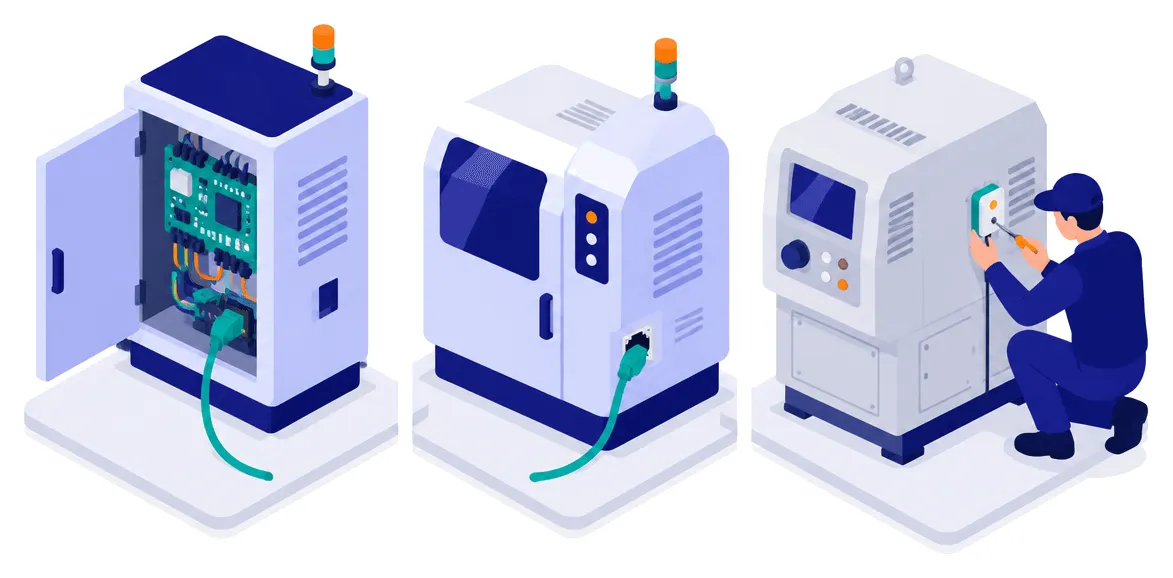
GI4 isn’t built: it’s configured. But reading from and writing to a machine depends on how it is made, and sometimes the manufacturer’s cooperation is needed. That limit applies to anyone doing this job: the difference lies in closing the loop when there is no easy way in.
That is why there is no fixed price list, and assessing the machine comes before any quote.
- PLC and panel software in GEM’s hands
- Anything is possible: data areas are added and exactly what is needed is exposed. This is the case for machines and panels built by GEM.
- A standard channel
- OPC UA, Modbus, S7: you read what the manufacturer has exposed. If a value isn’t published, it isn’t there.
- No channel
- We study the machine, or add hardware — sensors, modules, gateways — to bring the data out.
The problem
“Do I have to throw away my MES?”
Under, alongside or instead of your management system
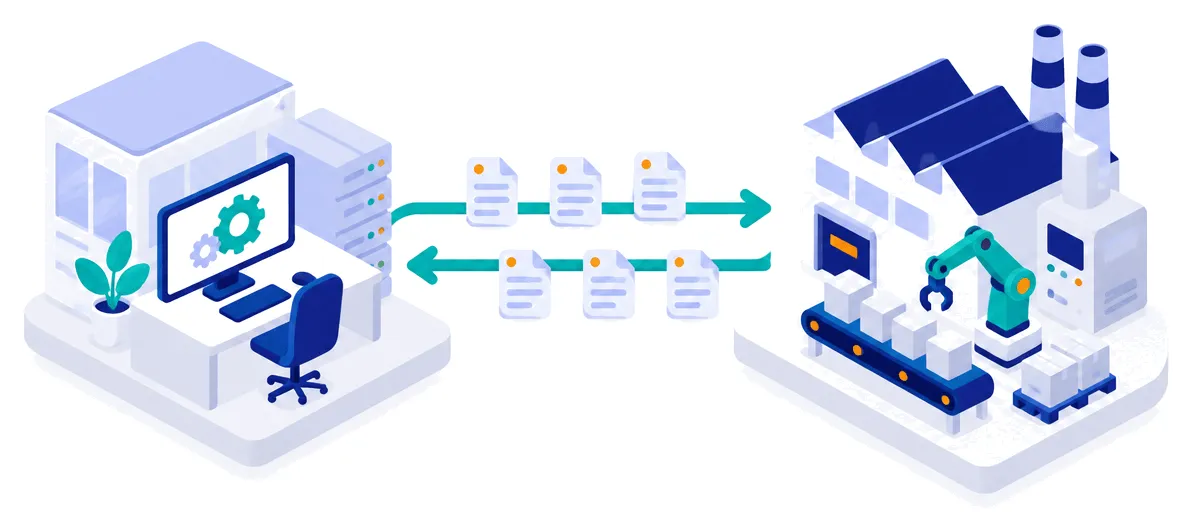
No. GI4 can sit under a MES as the executor, alongside it as an observer, or in its place if there isn’t one. From the management system it can receive batches, products and recipes and take them to the machines.
The channel is MQTT, OPC UA, HTTPS services, databases or exchange files. The protocol is standard; the meaning of each system’s messages isn’t: every integration is built to measure — it has been done many times, and each time on that customer’s own system.
The problem
“Where does my data end up?”
In your company, in two stores
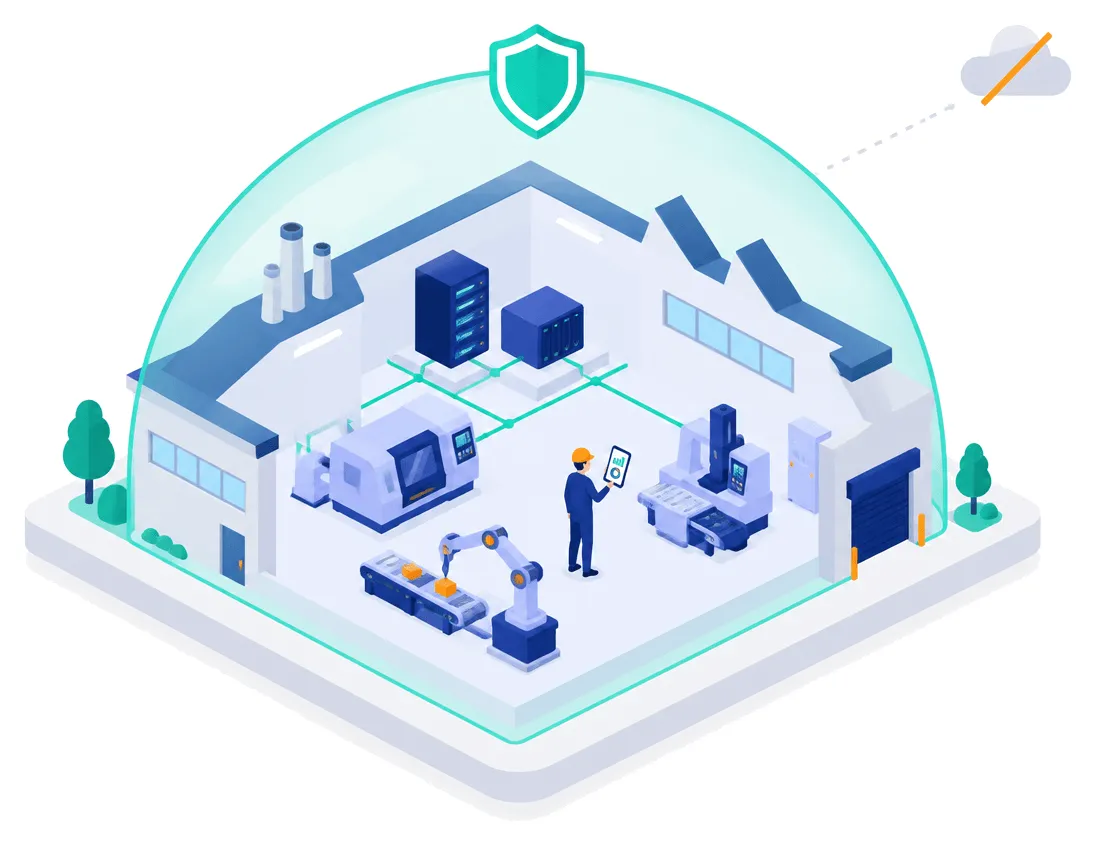
GI4 runs at the edge, on Docker: on the company’s servers or, in smaller plants, on a preconfigured NAS supplied by GEM. Production data doesn’t go to the cloud. It is accessed from a browser, on computers and mobile devices.
Each value goes into one of two stores, both, or neither, decided parameter by parameter: the relational database for the current value and the change history — who, when, with which batch and recipe —, the time-series database for how the machine behaved over the last few hours.
The problem
“How much work is it to add a machine?”
Configuration is a file, not a project
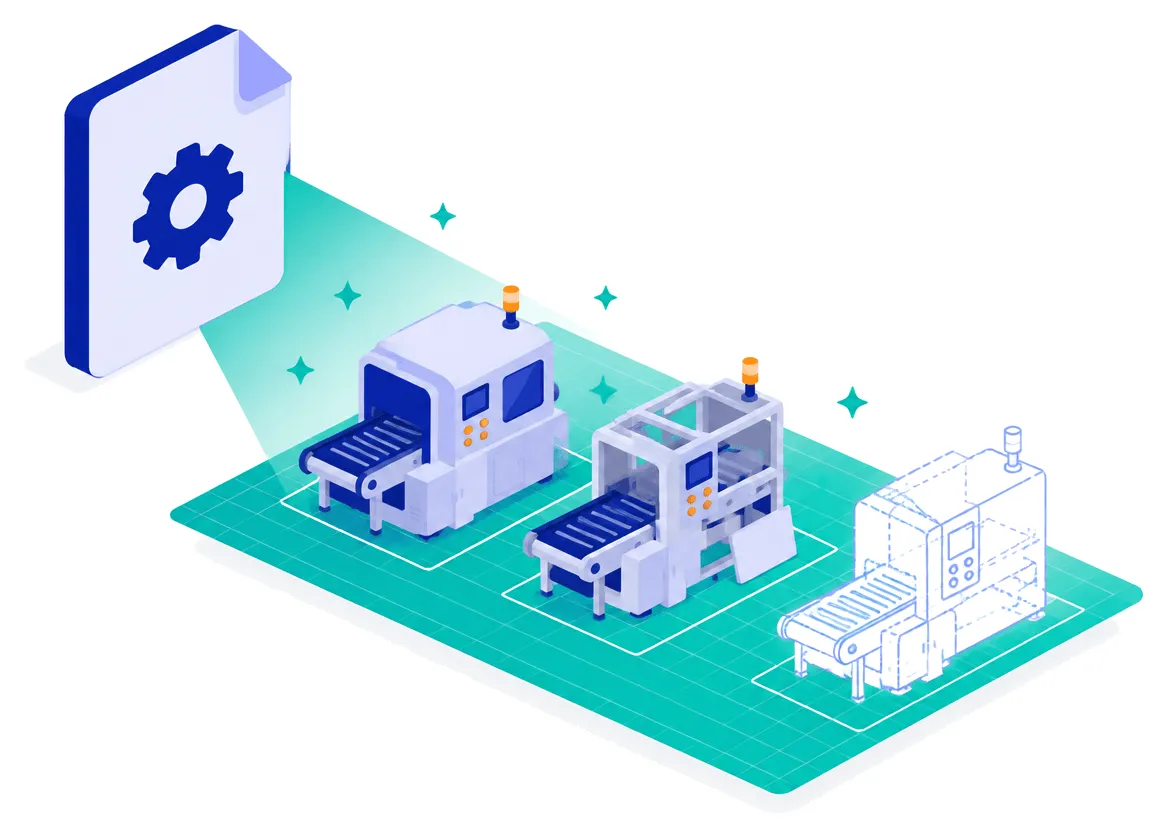
Each machine has its own parameter catalogue: where to read each value, what type it is, where to store it, how often and beyond which thresholds a sample is worth writing. From the configuration file line and machine are generated automatically, with all their parameters, and acquisition starts.
The acquisition engines have a standard core — reading, normalisation, writing, thresholds — and tailored edges for each machine: protocol, addresses, meaning of values. When writing, they add the context: user at the panel, active batch and recipe.
The problem
“What exactly do I need to get?”
A core, and the modules you need
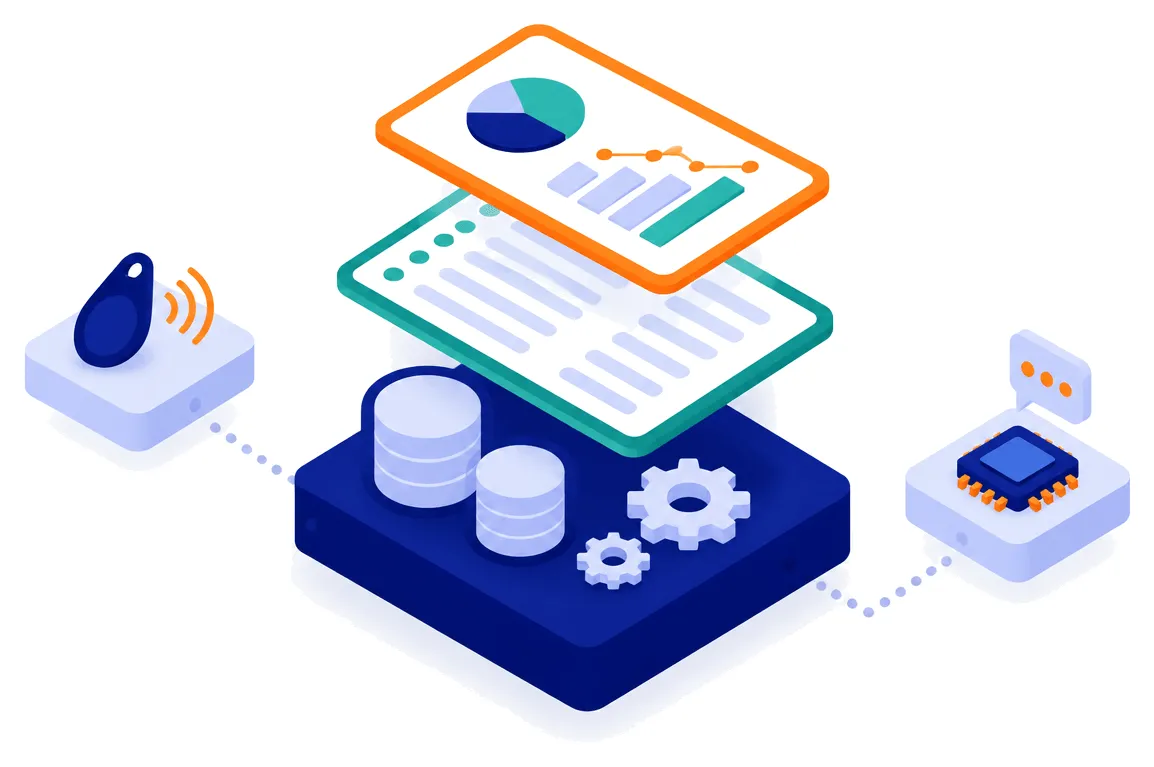
At the centre is the core: the acquisition engines and the databases. On top, two web interfaces: the GI4 app, which manages batches, recipes, users and downtime causes, and MIO, for dashboards and analysis.
Added when needed: KID, operator access with an RFID key, and the artificial intelligence agent that queries GI4’s data with knowledge of the plant.
Start with one machine and grow to lines, departments and whole factories. No mandatory subscription and no per-user or per-device licence: the system is bought once and belongs to the company.
At a glance
- PLCs and machines via OPC UA, S7, Modbus, or with added hardware
- MES and ERP via MQTT, OPC UA, HTTPS, databases or files
- At the edge on Docker: company server or preconfigured NAS
- Relational and time-series databases, chosen parameter by parameter
- No subscription, no per-user licence
Other topics
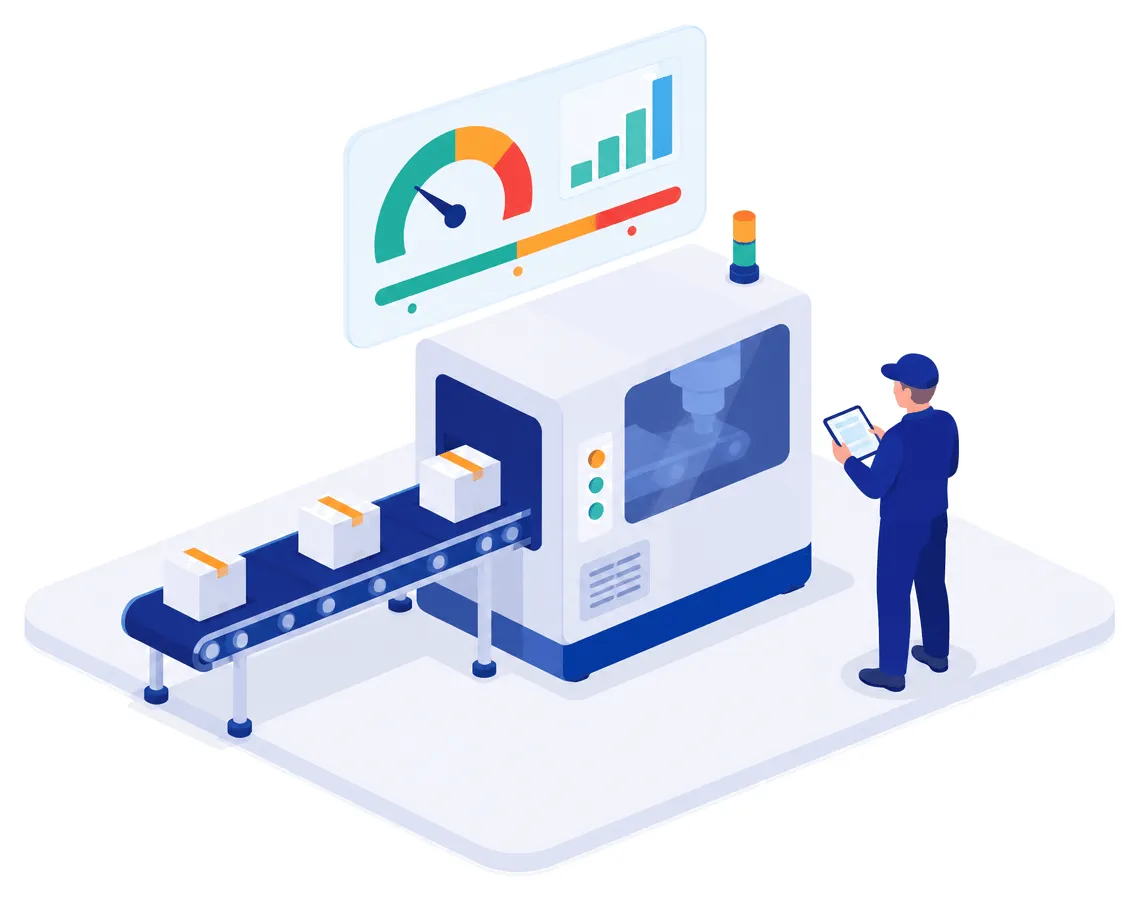 OEE and downtime Where production is really lost: times, states, causes.
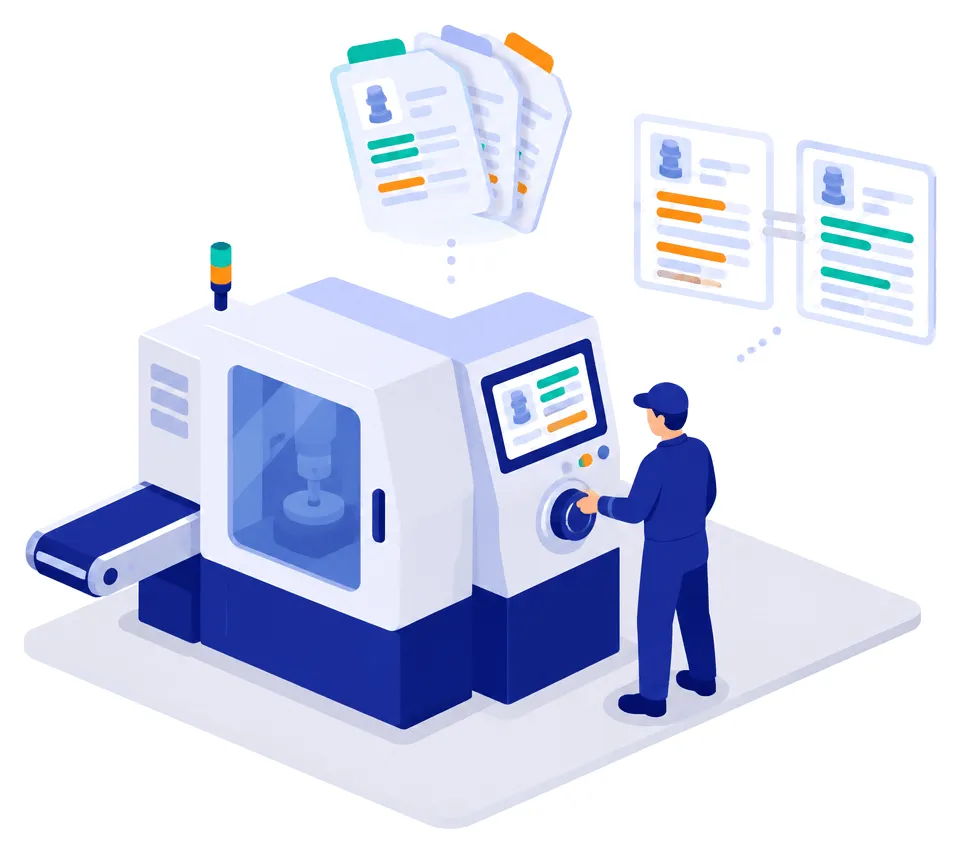 Recipes and parameters Automatic versions, comparisons, readable parameters.
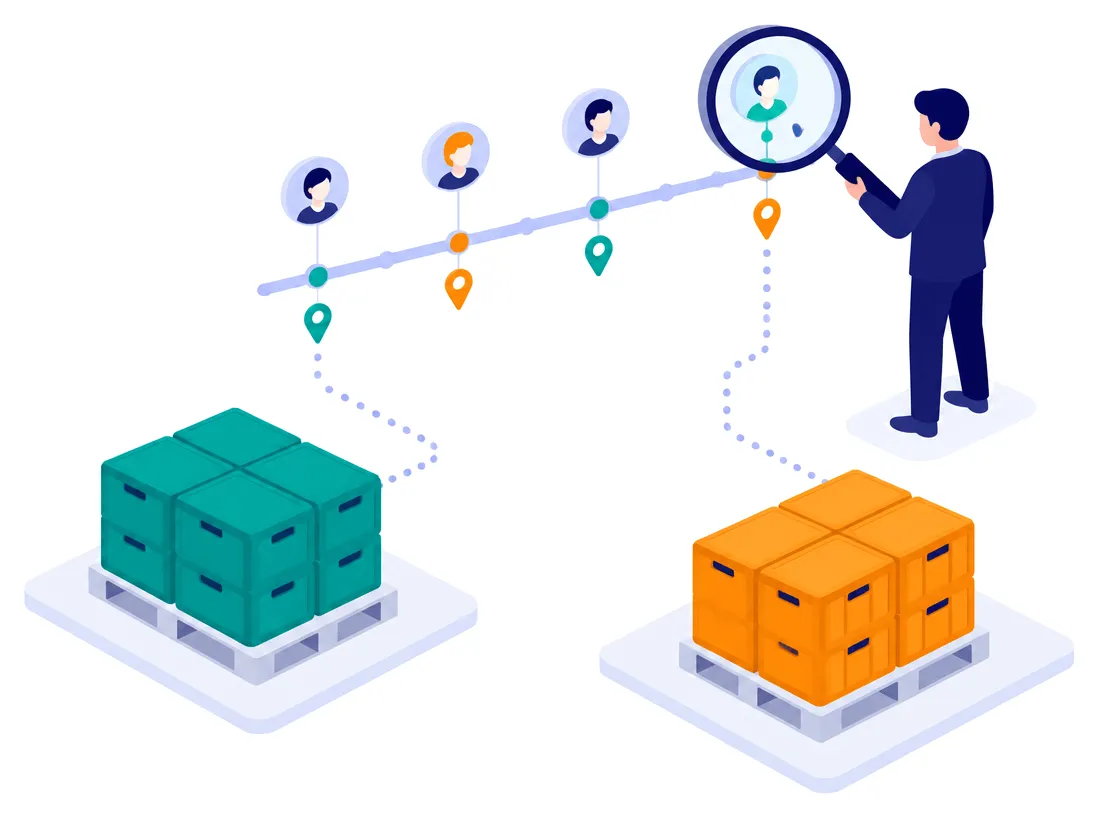 Batches and traceability Who changed what, when, in which batch.
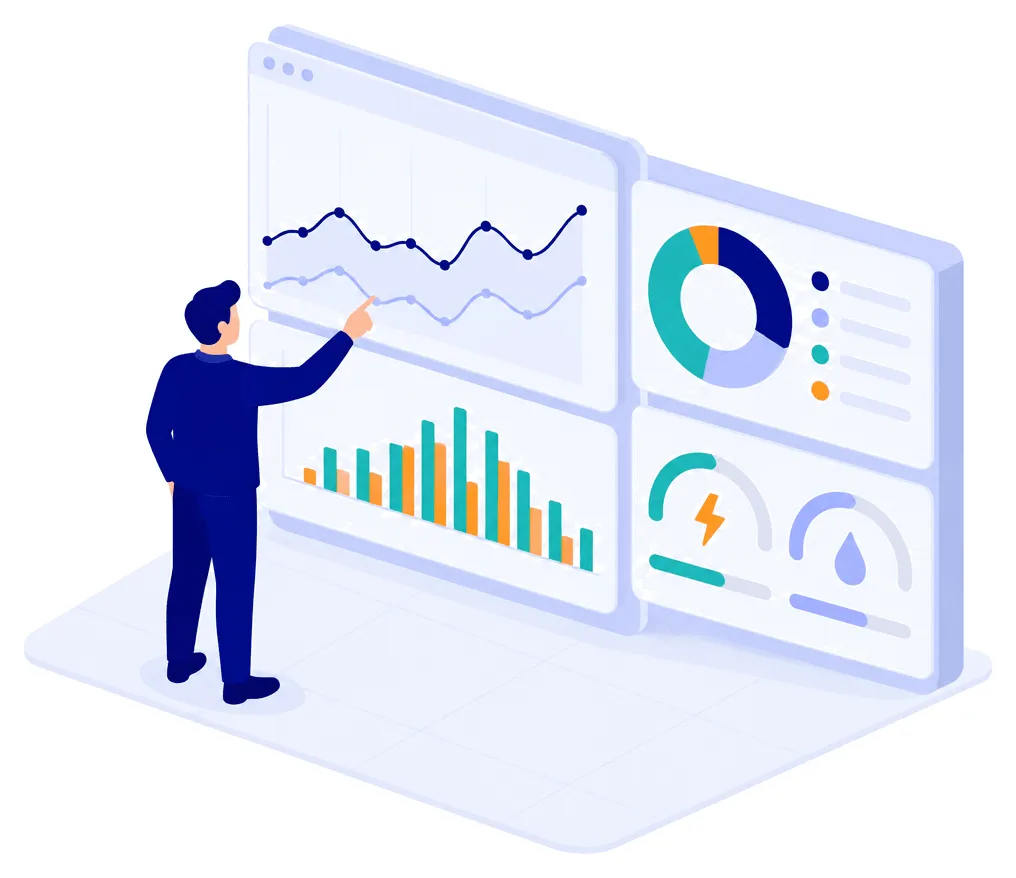 MIO: dashboards and analysis Cross-referenced charts, per-piece quality, energy use.
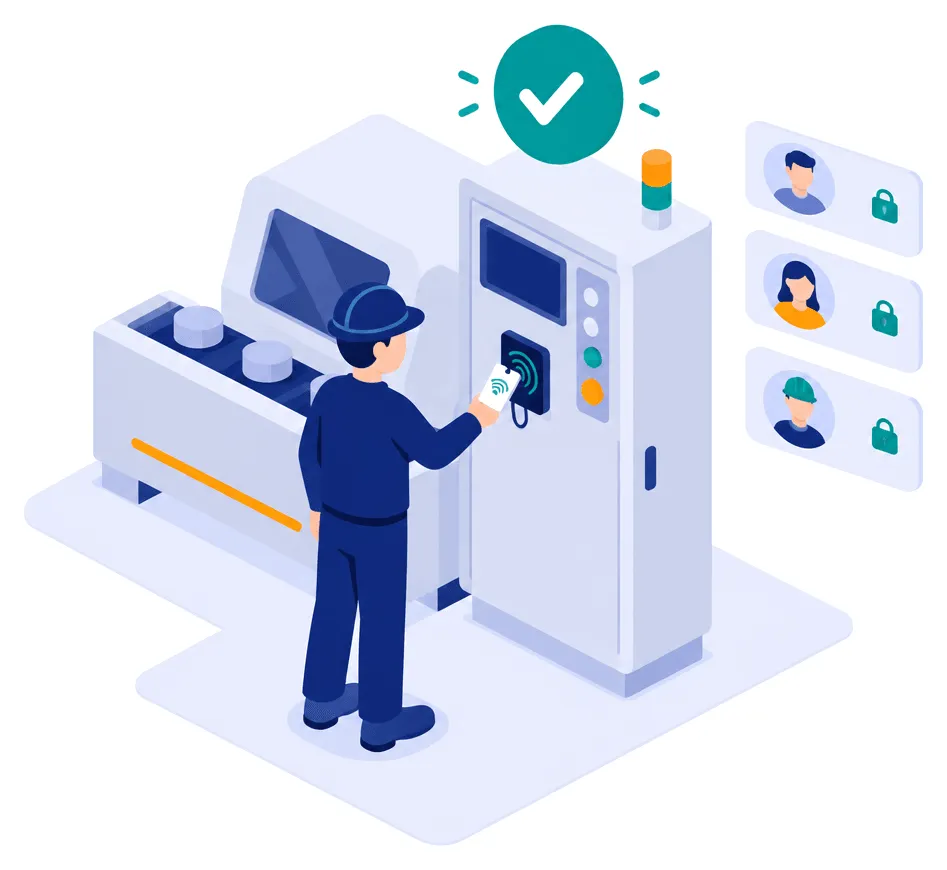 Operators and access Personal keys, permissions, the shop floor at the centre.
How open is your machine?
It is the question that decides the time and cost of every GI4 installation. We look for the answer together, on your plant, before any quote.
- 8plants in operation
- 4industries
- 28machines connected in the largest installation, across 11 lines