A shared password, and nobody knows who changed what.
With GI4 every change carries the name of whoever made it. Access goes through a personal key, and the shop floor decides what is important to see.
Let's talk about your plant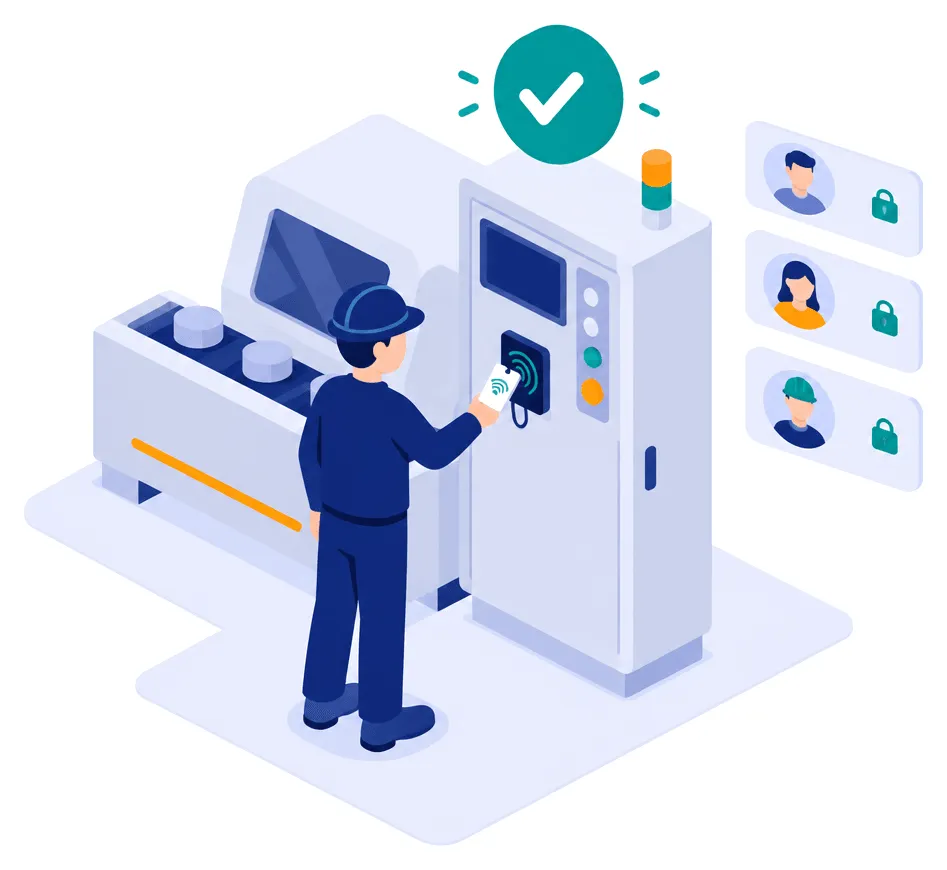
The questions on this page
- “Everyone uses the same password.”KID: a personal key instead of a password
- “Who logged in to that machine, and what did they do?”Logins and machine messages
- “Out of 400 parameters, which ones matter?”The people doing the work decide what matters
- “Will it change the way my operators work?”GI4 works alongside, it doesn’t take over
The problem
“Everyone uses the same password.”
KID: a personal key instead of a password
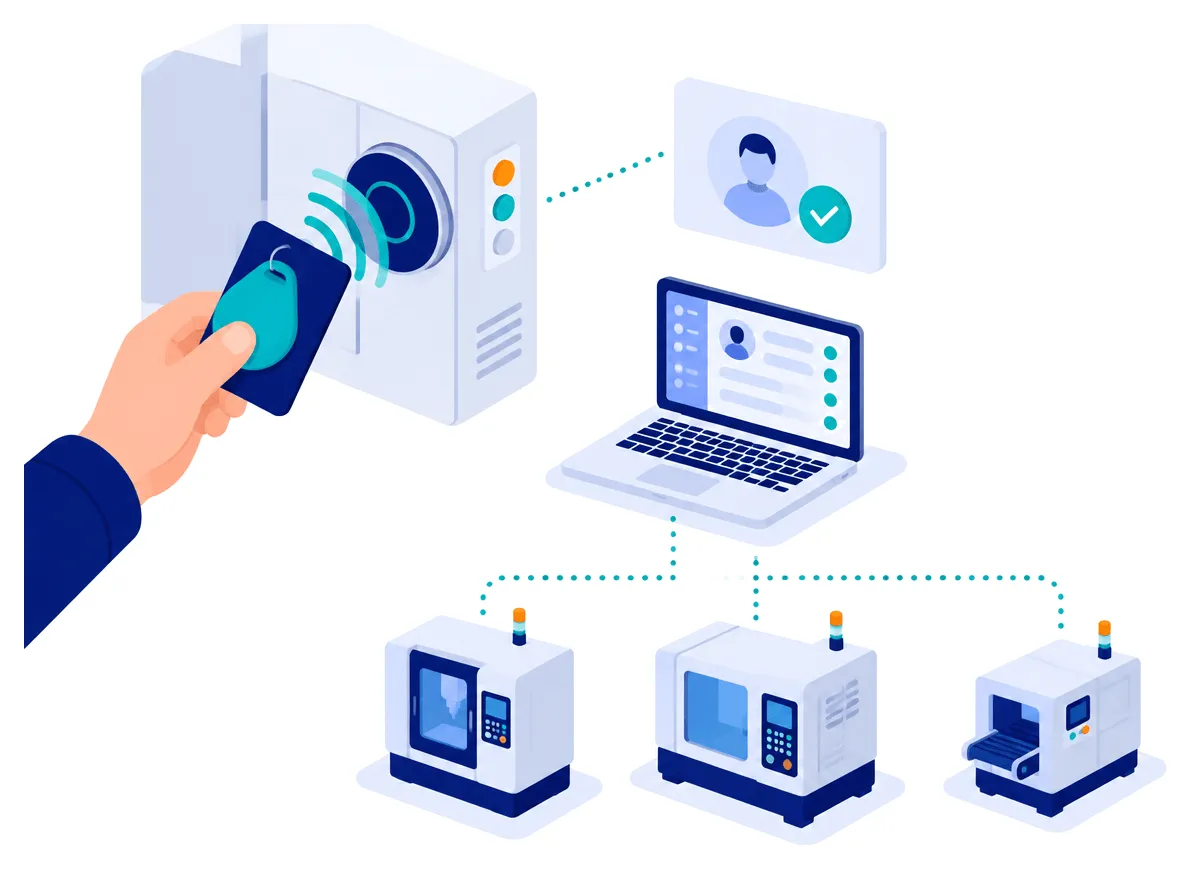
With KID operators hold their RFID key, card or badge up to the machine’s reader: the system recognises them and grants their access level.
Shared passwords aren’t eliminated by a rule: they are eliminated by making the right alternative more convenient. Holding up a key is faster than typing, so operators do it — and security arrives as a side effect of convenience.
- Shared password
- The key is personal: it can’t be lent without noticing.
- Who changed the parameter?
- The user is recorded with every change.
- Someone joins, or leaves
- Centralised management in the GI4 app: a few clicks, effective on every machine.
- Complex passwords, forgotten
- One gesture, no typing.
The problem
“Who logged in to that machine, and what did they do?”
Logins and machine messages
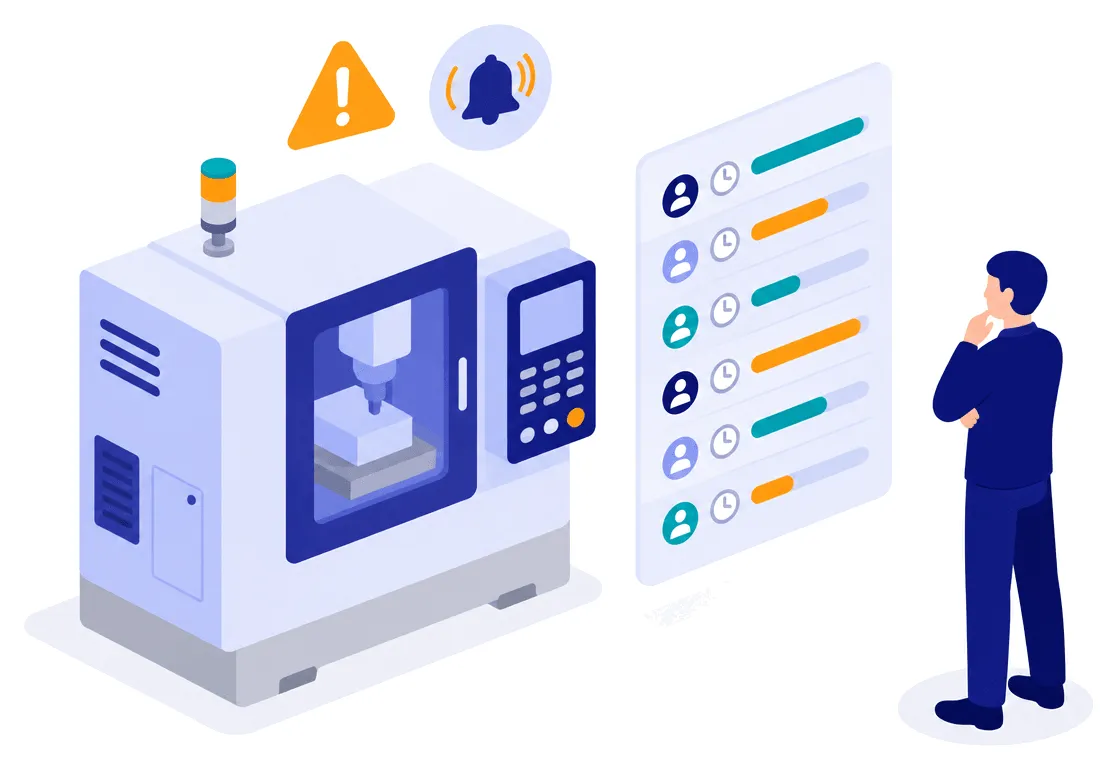
Login events show date and time, user, machine, login type, level and minutes logged in: who was on the machine, and for how long.
Machine messages — errors and warnings from the field — carry code, text, type, priority and machine zone, and how long they have been active. A safety alarm can thus be read both as an occurrence and as a duration.
The problem
“Out of 400 parameters, which ones matter?”
The people doing the work decide what matters
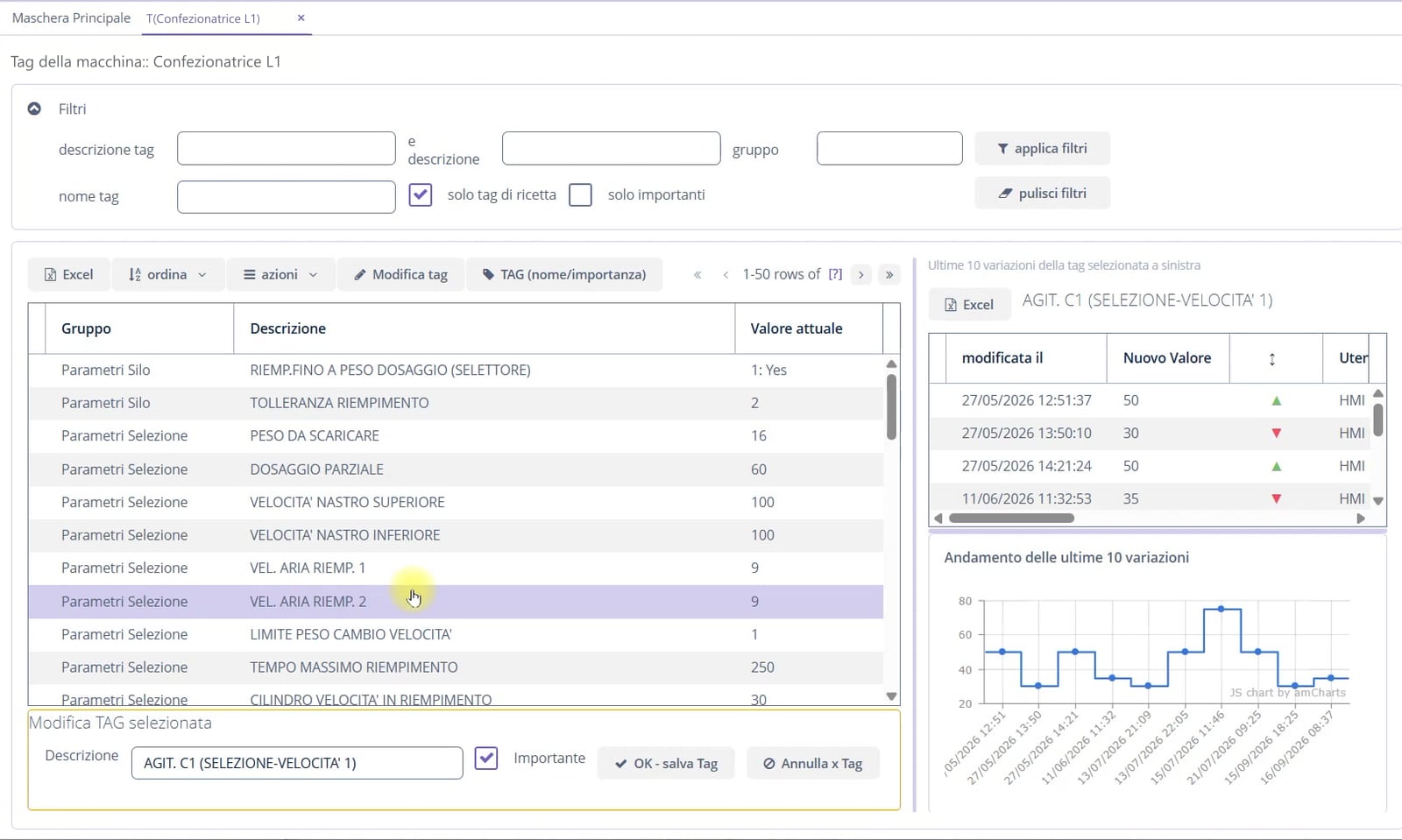
The order of importance of parameters is set by operators, inside GI4: not by GEM engineers or the technical office, because the know-how to judge it is on the shop floor. It isn’t a tick box but a ranking, and the “important only” filter appears everywhere: recipes, comparisons, batches. On one of the machines, 99 rows become 42.
The shop floor can also rewrite parameter descriptions and rename groups in words people understand. And those descriptions are not overwritten by configuration updates: otherwise nobody would ever rename anything.
The problem
“Will it change the way my operators work?”
GI4 works alongside, it doesn’t take over
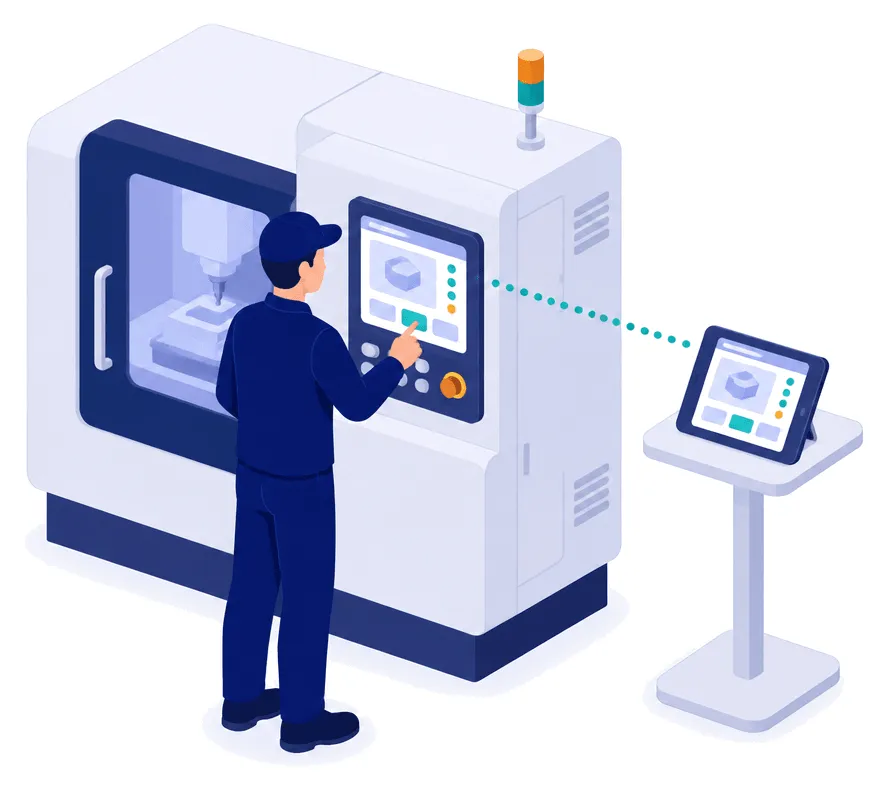
The operator panel stays in charge. GI4 may become the most used tool, but working from the machine always remains possible, by design.
For the two things operators must be able to do without opening the whole of GI4 — starting a batch and assigning a downtime cause — there are simplified pages that can be embedded in the panel.
Permissions are configured by function and by role. The principle is to restrict the little that is irreversible and track the rest: every action records who did it. Reopening a completed batch, for example, is reserved for the shift supervisor.
At a glance
- Machine access with a personal RFID key (KID)
- Users and levels managed in one place, for every machine
- Login events with duration, machine messages with duration
- Importance, descriptions and groups decided by the shop floor
- Simplified pages on the panel, permissions by function
Other topics
 OEE and downtime Where production is really lost: times, states, causes.
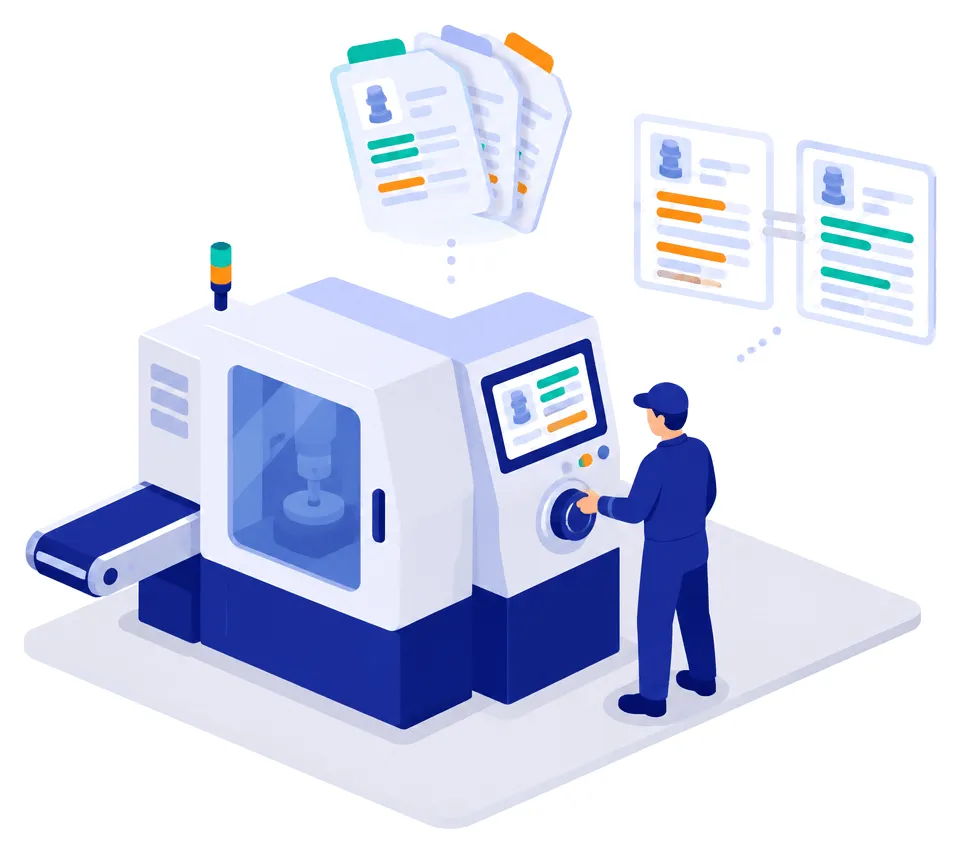 Recipes and parameters Automatic versions, comparisons, readable parameters.
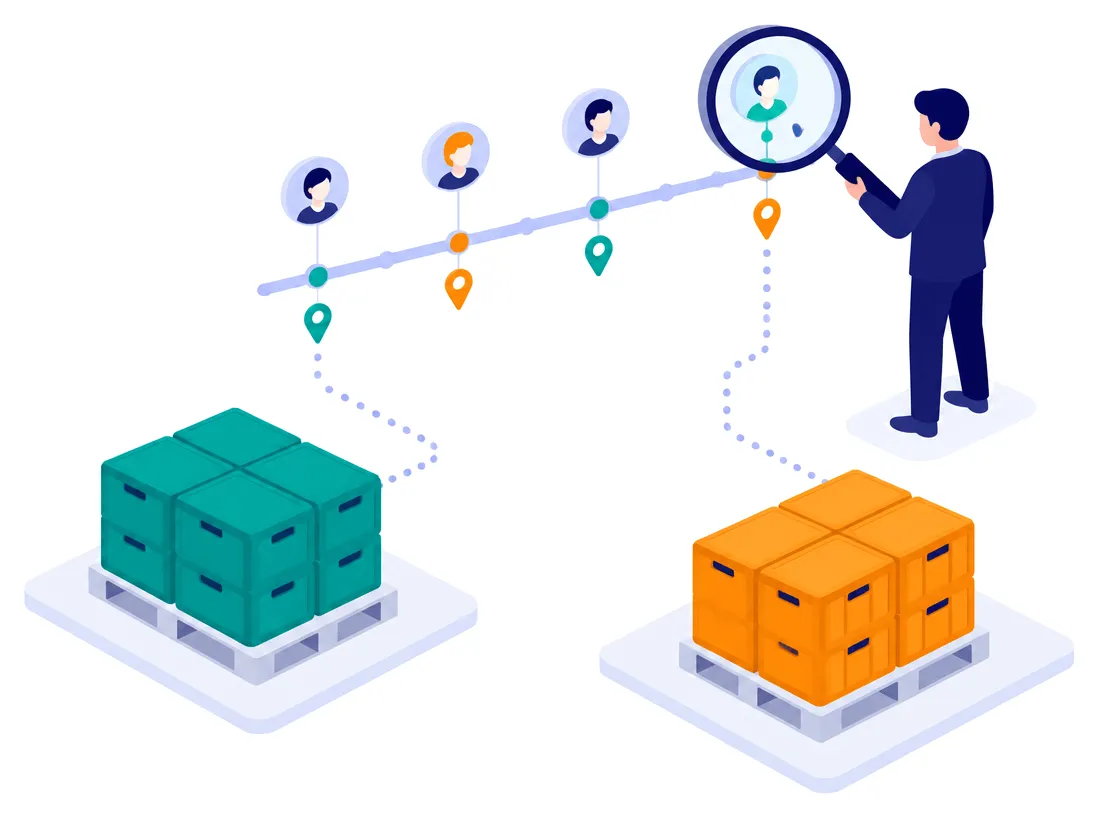 Batches and traceability Who changed what, when, in which batch.
 MIO: dashboards and analysis Cross-referenced charts, per-piece quality, energy use.
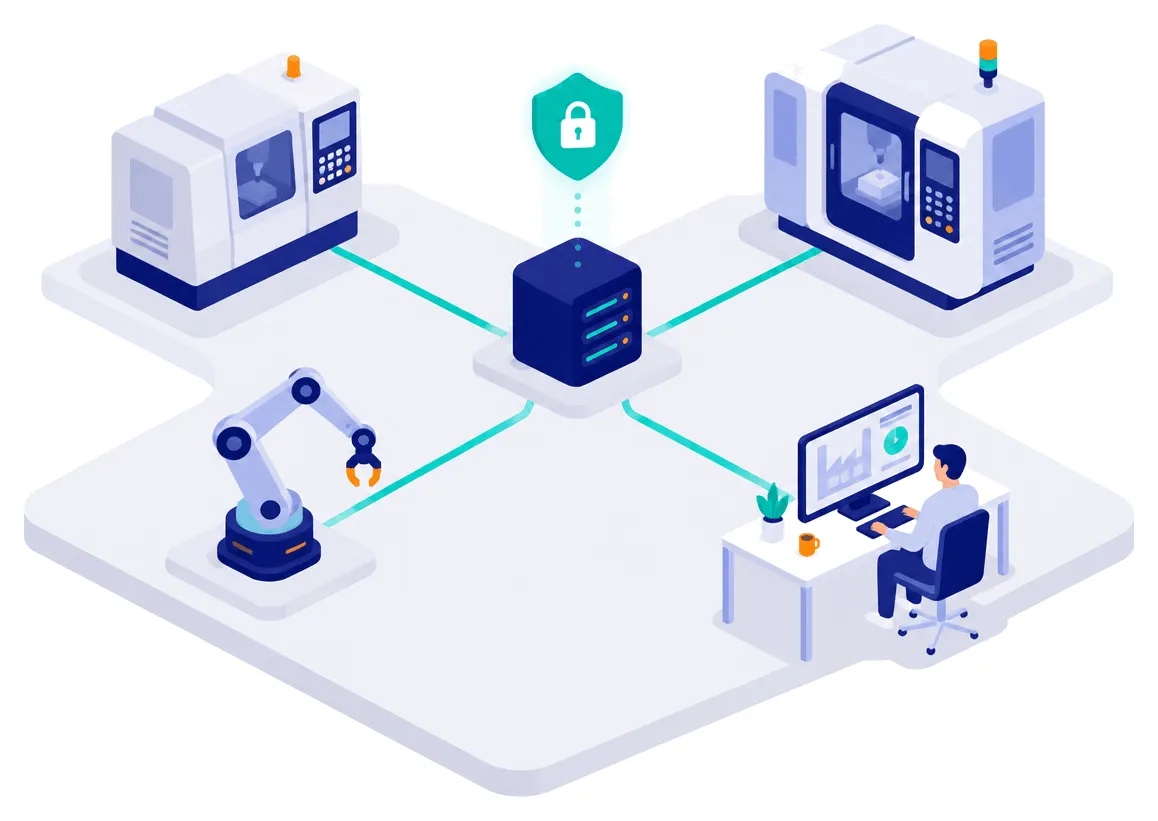 Connecting machines and systems Machines of any age, MES and ERP, data kept in-house.
How open is your machine?
It is the question that decides the time and cost of every GI4 installation. We look for the answer together, on your plant, before any quote.
- 8plants in operation
- 4industries
- 28machines connected in the largest installation, across 11 lines