Tuesday’s batch came out right, Wednesday’s didn’t. What changed?
Every change carries which parameter, from which value to which, in which batch and recipe, by whose hand. That is what gives you the answer — not the saved recipe.
Let's talk about your plant
The questions on this page
- “Which recipe was it made with?” isn’t enoughTwo batches compared, with what happened inside each
- “Who changed that value, and when?”The history of every parameter
- “Make me March’s batch again.”A new batch, even starting from an old one
- “Is the next batch ready?”Available, queued, running
- “I already have a system that decides what to produce.”Four ways to manage batches
The problem
“Which recipe was it made with?” isn’t enough
Two batches compared, with what happened inside each
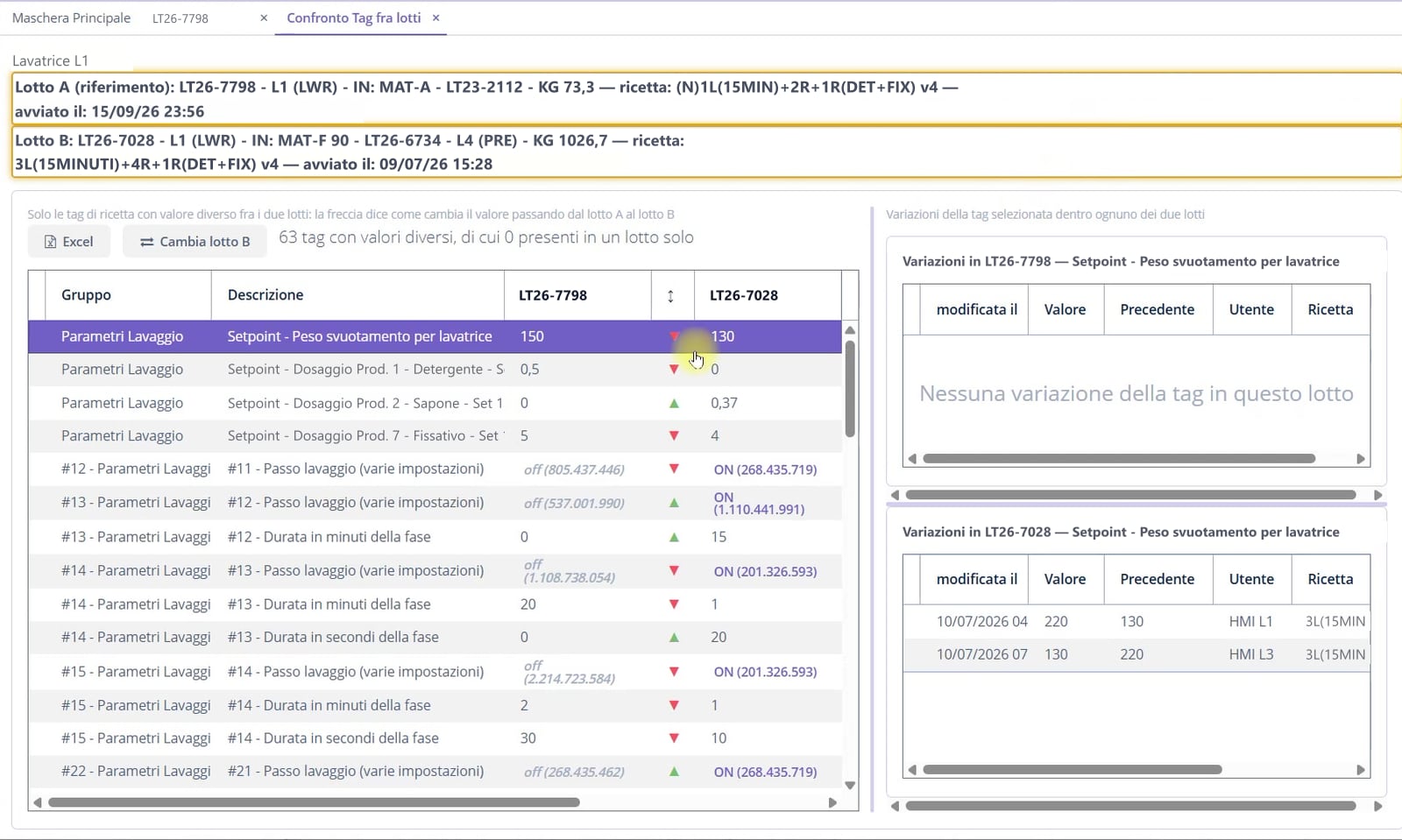
Any MES can tell you which recipe a batch was made with. The real question is why Tuesday came out right and Wednesday didn’t, and to answer it you need to know what was changed during production.
Pick a reference batch and one to compare: the table shows only the parameters that differ, with an arrow showing how they change. Alongside, for the selected parameter, two histories: what was touched during each batch — including trials never saved to the recipe — with the operator and the recipe active at the time.
The problem
“Who changed that value, and when?”
The history of every parameter
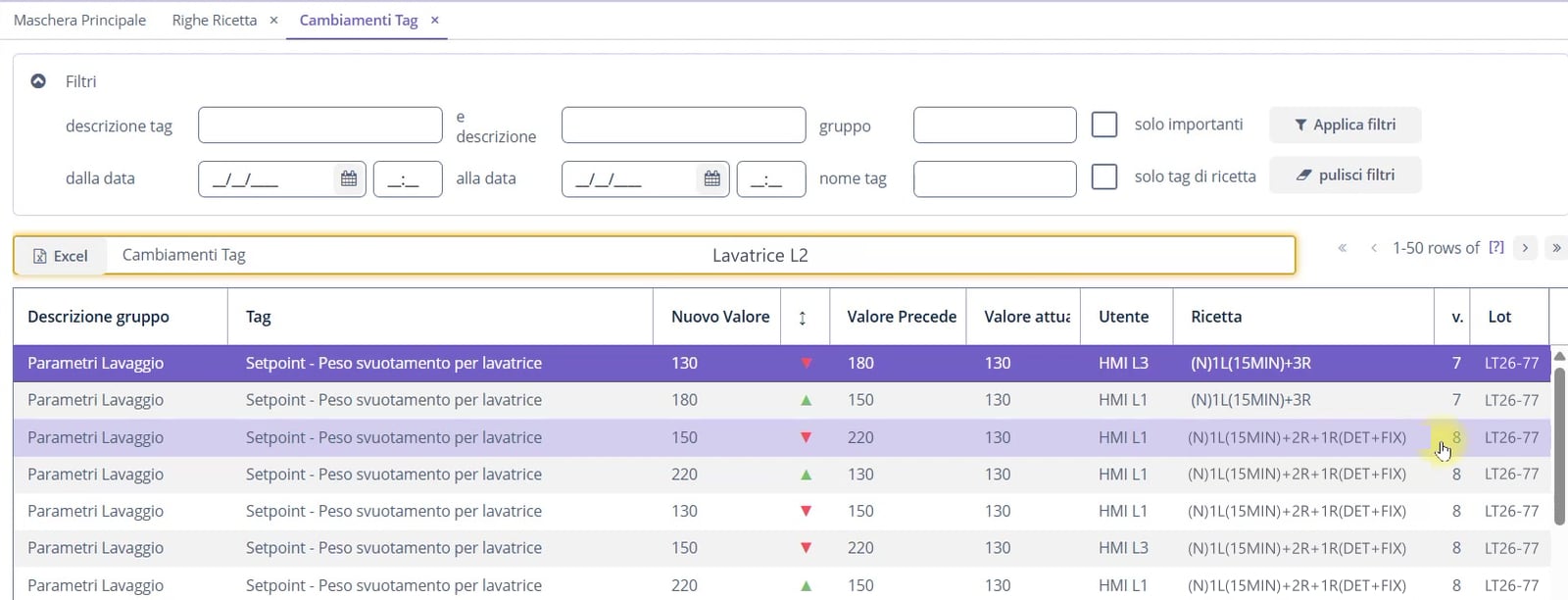
Every change is saved with the user logged in at the panel, date and time, and the active batch and recipe. Filter by parameter, period, operator, recipe or batch, and export.
GI4 also separates what the system wrote when a batch started from what someone changed while the machine was running. Without that distinction the two blur together, and the history loses most of its value.
The problem
“Make me March’s batch again.”
A new batch, even starting from an old one
Creating a batch takes two things: the code and the hourly production target. The target isn’t a detail: without it, OEE can’t be calculated. GI4 sets the current recipe and version for each machine on its own: the batch is complete from the start, and you only step in where needed.
For each machine you can change the recipe, choose not to send it or exclude the machine from the batch. Starting from an origin batch, you decide whether to keep the values used then or move to the recipe’s latest version.
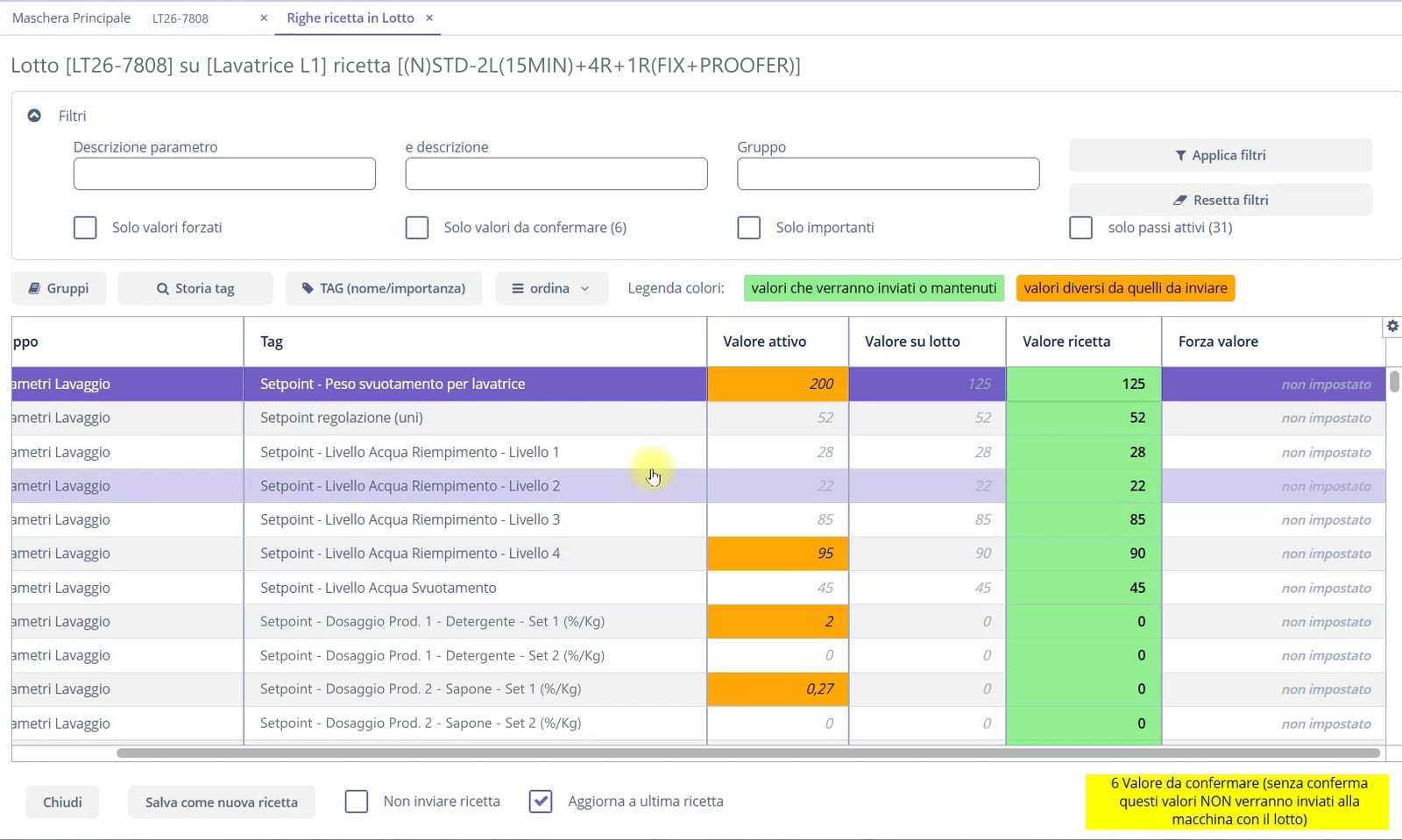
Before the batch starts, a page shows row by row what will change on the machine: active value, batch value, recipe value. A parameter can be forced for that batch only, without touching the recipe.
The problem
“Is the next batch ready?”
Available, queued, running
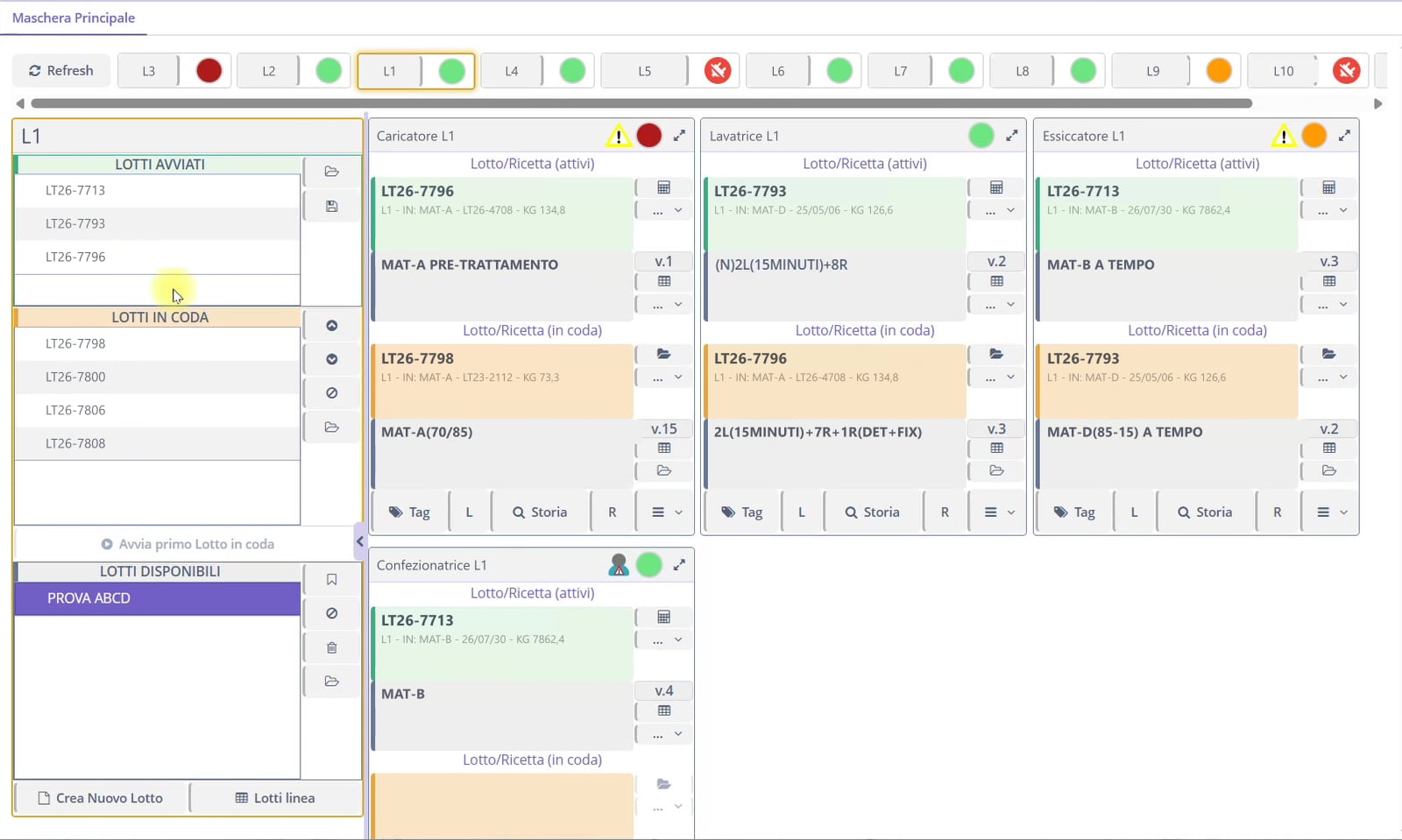
A newly created batch stays available and can still be edited. Once queued, it starts at the next batch change, requested by the machine or decided by GI4 depending on the plant configuration. The queue can be reordered until the batch has been run.
A line can have one batch for all machines or a different batch for each; at batch change the machines switch recipe all together or in sequence, one after another.
Reopening a completed batch is reserved for the shift supervisor, and doesn’t rewrite history: the new run is added with its own date and author.
The problem
“I already have a system that decides what to produce.”
Four ways to manage batches
How much GI4 is in charge is chosen plant by plant: from pure observer to production director.
- Active
- GI4 creates batches and sequences, with products and parameters, and sends them to the whole line or machine by machine. Start can come from GI4, the operator panel or a push button.
- Active/passive
- The MES or ERP decides what to produce; GI4 receives batches, products and recipes and takes them to the machines.
- Advanced passive
- GI4 generates batches and products itself, from the date or the recipe name. On a line of threading machines the master decides the batch and passes it to the slave: nobody on the floor types anything.
- Passive
- GI4 reads batch and product from the machine and records, without intervening.

At a glance
- Every change with parameter, values, batch, recipe and operator
- Two-batch comparison with the changes made in each
- Available, queued and running batches, per line or per machine
- Origin batch, forced values, recipe not sent
- Four modes, from observer to production director
Other topics
 OEE and downtime Where production is really lost: times, states, causes.
 Recipes and parameters Automatic versions, comparisons, readable parameters.
 MIO: dashboards and analysis Cross-referenced charts, per-piece quality, energy use.
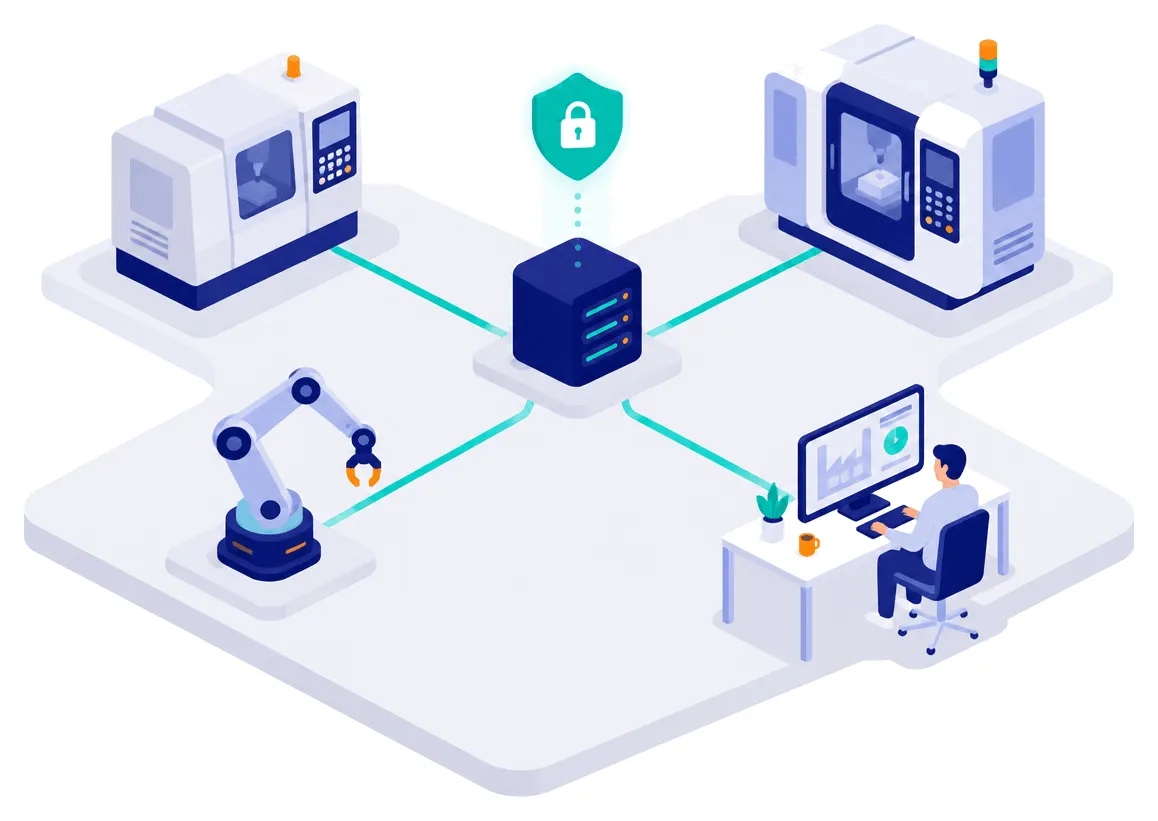 Connecting machines and systems Machines of any age, MES and ERP, data kept in-house.
 Operators and access Personal keys, permissions, the shop floor at the centre.
How open is your machine?
It is the question that decides the time and cost of every GI4 installation. We look for the answer together, on your plant, before any quote.
- 8plants in operation
- 4industries
- 28machines connected in the largest installation, across 11 lines